Insight brief
The problem
Food-sector organisations can hold substantial audit, quality and technical evidence while still spending significant time joining it together. A non-conformance may begin in an inspection record, lead to a product hold, require engineering or training action and finish with a verification check. When those stages sit in separate folders, spreadsheets and email threads, the evidence may be complete in parts but difficult to use as one management account. The commercial question is whether the current approach supports decisions efficiently throughout the year, not simply whether documents can eventually be found.
Consider a ready-meals site preparing the first delivery of a new retailer line. During final label verification, the technical team identifies that one changeover instruction does not match the approved specification. Stock is isolated, the instruction is corrected and affected operators are briefed. Before release, the retailer's technical contact asks for the finding, affected-batch decision, corrective action and verification evidence. If each item is owned in a different system, managers must pause launch activity to reconstruct the response. The immediate consequence is avoidable delay at a customer-sensitive moment, even though the site may have managed the underlying issue responsibly.
Repeated evidence reconstruction creates costs that are easy to miss. Quality specialists become information chasers, operational teams provide the same update several times, and leaders wait longer for a dependable position. It can also weaken the answer: a photograph may show that a correction occurred but not who accepted it, why it was sufficient or whether the revised control worked on the next changeover. Left as a routine way of working, this fragmentation makes assurance more dependent on individual memory and reduces the benefit of the work teams already perform.
How WorkSafe can help
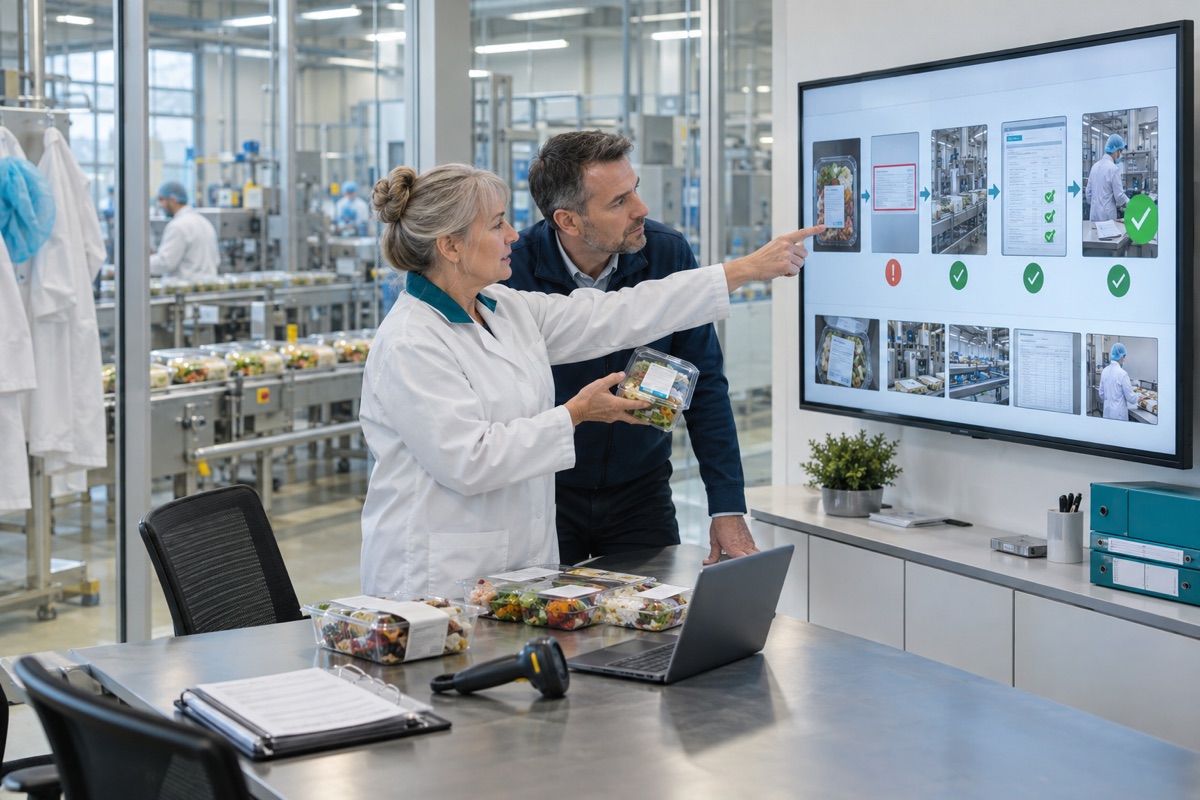
WorkSafe helps WRMH customers keep the BRCGS-related finding, risk decision, containment, action owner, due date and verification evidence in a connected trail. Quality, technical and operations managers can review the same live position instead of maintaining parallel summaries. When a customer question arrives, the response can be built from the controlled record created during normal work rather than from a temporary evidence-gathering exercise.
A sensible first step is to measure one representative assurance journey. Choose a recent non-conformance or customer-sensitive technical finding and record how many people, systems and follow-up requests were needed to reach an accepted close-out. Then define the decisions the evidence must support: what was affected, what could continue, which action addressed recurrence, who verified effectiveness and what could be shared externally. This gives leaders a practical baseline for judging value without assuming that every record needs the same workflow or visibility.
Connected evidence can improve whole-life value by reducing duplicated administration, preserving decision context and making open actions easier to manage before deadlines tighten. It can also support more confident customer conversations because the site can explain both the immediate response and the longer-term control. WorkSafe does not guarantee certification, audit or commercial outcomes, but it can help WRMH customers make existing assurance activity more usable, timely and visible.
Common mistakes
- Judging an evidence system mainly by storage capacity rather than the decisions it helps managers make.
- Building a separate customer-response pack that immediately drifts away from the live action record.
- Counting closed actions without checking whether verification evidence supports the accepted outcome.
- Calculating software value from audit-preparation time alone and ignoring routine chasing across the year.
When to use WorkSafe
Use WorkSafe when BRCGS findings and customer-assurance requests involve several teams, evidence types or decision stages. It is particularly useful where managers want to reduce repeated information gathering, retain the reasoning behind close-out and see whether important actions are genuinely ready to present or still require work.